
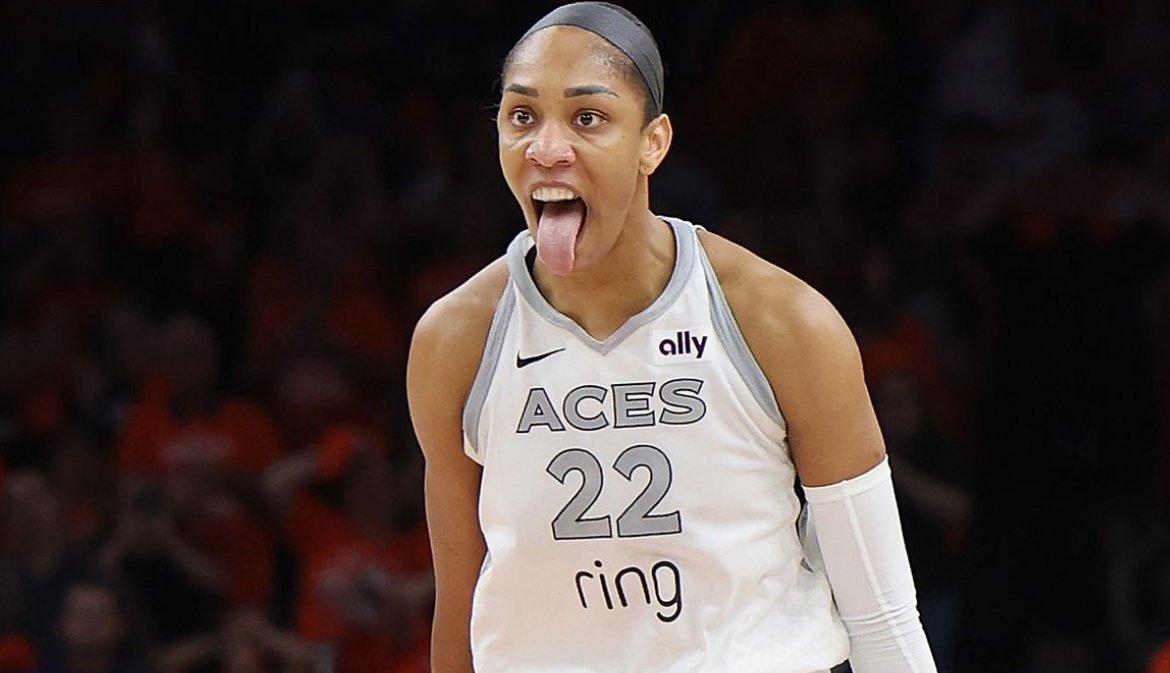
At a moment poised to redefine professional women’s basketball in the United States, A’ja Wilson — arguably the WNBA’s greatest active player — has publicly declared she will not leave the Las Vegas Aces despite a seismic free agency period looming across the league. Her decision underscores not only her commitment to the franchise that drafted her first overall in 2018 but also highlights the growing complexity of the league’s economic and cultural landscape as it enters a new era of expansion, compensation, and player empowerment.
Wilson’s statement, made during a USA Basketball training camp in Phoenix, arrives against the backdrop of a freshly ratified collective bargaining agreement (CBA) that has dramatically increased salary potential for players. Under the new terms, the maximum individual salary for 2026 is projected at $1.4 million, a staggering rise from the previous $249,244 maximum — a shift that many experts describe as transformative for the league’s future.
“I’m not looking,” Wilson said. “I know exactly where I am. I love Vegas. I’m not leaving Vegas. I’m looking to win another one.” Her words carry weight not only because of her status as a four-time WNBA MVP and three-time champion, but because nearly every other veteran player in the league — from Breanna Stewart to Sabrina Ionescu — is expected to test free agency under the new CBA rules, making her commitment a significant outlier in a period of potential upheaval.
Wilson’s career itself reads like a chronicle of dominance. Over the past several seasons she has not only led the Aces to three titles in four years, but also consistently posted elite statistics — including a recent season average of 23.4 points, 10.2 rebounds, and 3.1 assists — that reinforce her position as the cornerstone of the franchise.
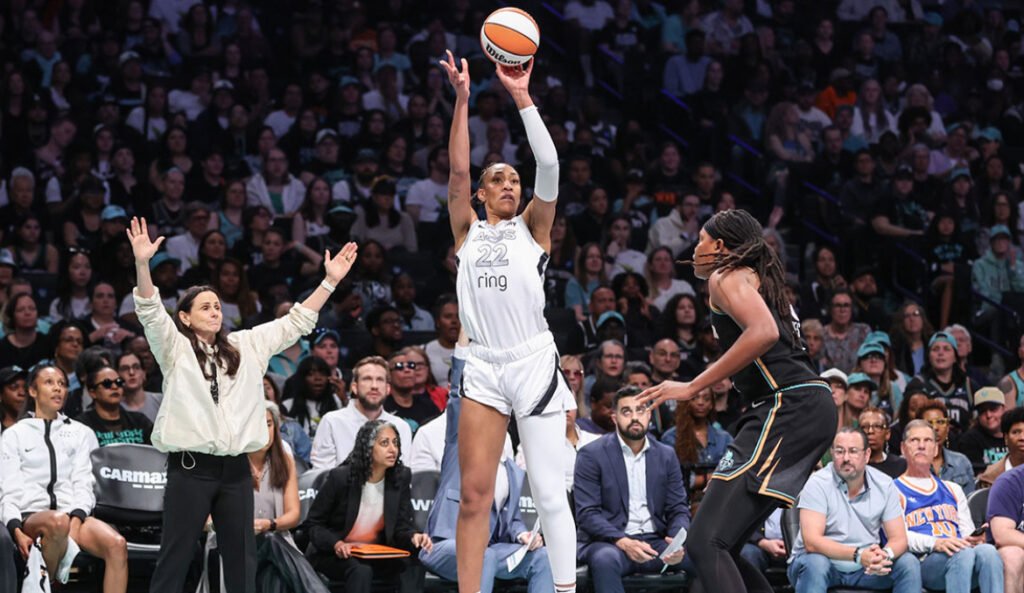
Yet her decision to stay extends beyond mere loyalty. As teams across the league brace for a dramatic redistribution of talent — accelerated by the introduction of new franchises in Portland and Toronto and an upcoming expansion draft — Wilson’s choice to remain can be interpreted as a strategic anchor for Las Vegas amid potential instability.
This stability comes at a crucial juncture. The WNBA’s growth has been meteoric: rising television ratings, expanded markets, and a swelling wave of young talent have propelled the league into unprecedented visibility. Under the new CBA, players will enjoy not only higher salaries but improved benefits and expanded schedules, signaling a broader shift in how professional women’s sports are valued in the United States.
Still, Wilson’s choice raises deeper questions about the evolving nature of athlete agency and allegiance. In an era when free agency often serves as the defining moment of a star’s career — a time when athletes leverage their peak earning power to maximize contracts or seek cultural fit — Wilson’s loyalty to the Aces stands in contrast to the increasingly transactional nature of professional sports. Her resolve challenges the modern assumption that top talent will inevitably seek greener pastures when given the opportunity.
Her larger legacy in the WNBA — including historic statistical achievements such as tying the league’s single-game scoring mark and winning an unprecedented four MVP awards — reinforces why her voice carries such influence.
Ultimately, Wilson’s announcement reflects both personal conviction and a broader narrative unfolding within the WNBA: one in which the sport is rapidly evolving, its stars wield unprecedented leverage, and its future looks more prosperous — yet more uncertain — than ever before. In choosing continuity over contractual exploration, Wilson may have done more than commit to one franchise; she may have offered a blueprint for leadership in a new age of women’s professional basketball.
Fonte : Reuters